
Table of Contents
- What Professional Lighting Software Actually Costs You
- Free vs. Paid Lighting Software: An Honest Breakdown
- Best DMX Control Software: Features That Decide the Choice
- Integrating Smart Lights into DMX Rigs: The Hidden Complexity
- Professional Lighting Software for Different Use Cases
- Portability, Ease of Use, and Technical Support
- Verdict: When the Investment Pays Off
- Frequently Asked Questions
Last Updated: September 2, 2026
The question of whether professional lighting software is worth the cost comes down to what you're actually buying. At DMXSmartLink, we work with DJs, churches, theaters, and live event teams daily, and the answer is rarely simple. Most buyers compare license price and miss the total cost picture entirely.
Professional lighting software translates your creative intent into DMX universe commands that fixtures respond to. Get this layer wrong and your show falls apart mid-set. Get it right and your entire rig behaves as a single, programmable system.
Below, we break down the real costs, honest trade-offs between free and paid options, and specific use cases where paying for professional-grade control is a clear win.
What Professional Lighting Software Actually Costs You
Most buyers focus on license price and stop there. That's the wrong frame.
Total Cost of Ownership: License, Hardware, and Hidden Fees
Total cost of ownership (TCO) includes the license, compatible hardware interfaces, required dongles, training time, and renewal fees. For many setups, the license is the smallest line item.
An entry-level professional control software license typically costs under $100 annually. Hardware costs compound: a USB-to-DMX interface ranges from budget options to pro-grade units like the ENTTEC DMX USB Pro, which delivers hardware-timed, buffered output that eliminates flicker on demanding fixtures. Network interfaces for Art-Net or sACN add further cost. Hidden expenses include fixture library subscriptions, visualizer add-ons, and time spent patching and programming new show files at each venue.
| Cost Category | What to Account For | Impact on Decision |
|---|---|---|
| Software license | Annual vs. one-time | Recurring cost adds up over 3+ years |
| Hardware interface | USB-DMX, node, or dongle | Required for physical DMX output |
| Fixture library | Bundled vs. subscription | Missing profiles slow programming |
| Training time | Hours to first show-ready state | Solo operators feel this hardest |
| Renewal/upgrade | Version lock vs. rolling updates | Critical for long-term reliability |
Software vs. Hardware Consoles: Where the Budget Goes
Hardware consoles give you physical faders and a dedicated interface, but start well into the thousands of dollars before adding wings, backup units, or cases.
Software running on a laptop or hub closes that gap significantly. The workflow differs, keyboard and trackpad instead of physical controls, but the protocol output is identical. Art-Net and sACN don't care whether the signal originates from a $40,000 console or a Raspberry Pi 5 running professional control software. What matters is latency, reliability, and fixture library coverage.
For mobile setups, software often wins on portability. For permanent installs where a technical rider specifies a particular console, hardware may be non-negotiable. Most working DJs and small venue techs operate in the middle: software control with a USB-DMX interface or network node.
PLASA's guide to DMX512 and lighting control protocols
Free vs. Paid Lighting Software: An Honest Breakdown
Free tools have become genuinely capable. That doesn't mean they're right for every situation.
What Free Tools Actually Deliver
Free lighting control software handles DMX universe output, basic fixture patching, cue list playback, and MIDI integration. For volunteer techs at small churches or hobbyists building home automation rigs, free options provide real capability without license cost.
Honest limitations appear at the edges. Free tools rarely offer commercial technical support with guaranteed response times. OSC control, advanced automation, pre-visualization, and system stability under demanding loads are harder to verify without formal reliability benchmarks.
Where Paid Software Earns Its Price
Paid professional software earns its cost through support, stability, and workflow efficiency.
Support means a real person you can contact when something breaks during load-in. For a church technical director running a Sunday service or a DJ with a paid event in four hours, guaranteed technical support has concrete value. Workflow efficiency means the software is designed for production speed under pressure, not just feature completeness.
Stability is hardest to quantify before purchase. Professional-grade software with hardware-timed DMX output eliminates timing jitter that causes fixture flicker or cue drift. According to ESTA's technical standards for DMX512, the DMX512-A protocol specifies up to 44 frames per second refresh rate. Software that can't sustain consistent output will show artifacts on responsive fixtures.
Best DMX Control Software: Features That Decide the Choice
The feature separating good DMX control software from great is how it behaves when something goes wrong.
Scalability, DMX Universe Count, and Performance Needs
Scalability means the number of DMX universes the software can address simultaneously and how gracefully performance degrades as the rig grows. A single DMX universe carries 512 channels, covering modest rigs. Add moving heads, LED wash fixtures, and smart lights and you'll exceed one universe quickly.
Professional control software should handle multi-universe output without requiring hardware upgrades at every step. Art-Net and sACN support large universe counts over standard Ethernet. For most mobile DJs and small theaters, two to four universes cover the full rig.
DMXSmartLink ships with over 11,700 fixture profiles from more than 1,300 manufacturers, covering over 42,000 channel modes, a library that covers nearly every professional fixture you're likely to encounter.
Latency, Reliability, and System Stability Benchmarks
Latency is the delay between a control input and the corresponding fixture change. For theatrical cues, latency under 50 milliseconds is imperceptible. For live music events synced to beat, even 20-30 milliseconds of inconsistent latency becomes noticeable.
Hardware-timed USB-DMX interfaces like the ENTTEC DMX USB Pro address this at the hardware level. The interface maintains its own clock and buffers DMX frames independently of the host operating system's scheduler, producing flicker-free control of demanding fixtures.
Redundancy is the other reliability factor. Professional setups should have a fallback plan: saved show files that can be recalled instantly, a backup control path over the network, or a secondary device that can take over without reprogramming. The DMXSmartLink HUB's scene recall system addresses this directly, one press returns the rig to exactly the saved state.
InfoComm's AV standards resources for live event production
Integrating Smart Lights into DMX Rigs: The Hidden Complexity
Most guides treat DMX fixtures and smart lights as separate problems. They're not, and solving them separately creates chaos mid-show.
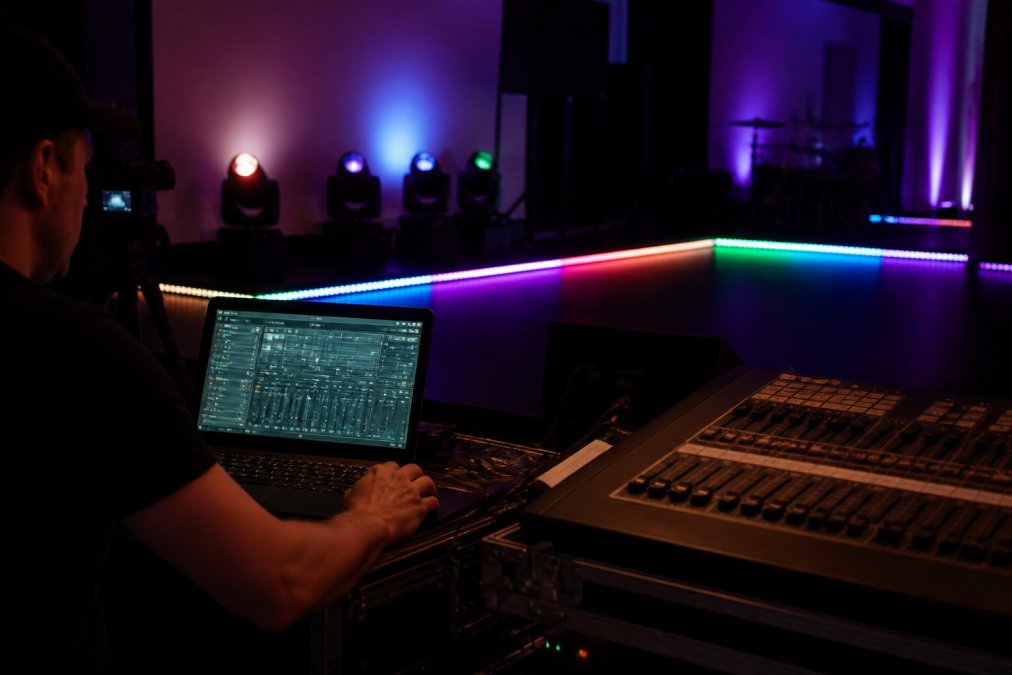
Smart lights like Govee fixtures operate over Wi-Fi using proprietary protocols. Professional DMX fixtures operate over wired or Art-Net networks using DMX512. The gap between these worlds is where most hybrid setups break down. Running the Govee app on a phone alongside the lighting console means two separate control surfaces, two separate cue lists, and no reliable synchronization during live performance.
Hybrid Setup Strategies: Running Govee Alongside Professional Fixtures
The correct approach is to eliminate the gap by patching smart lights as real DMX fixtures inside a single control environment. DMXSmartLink connects Govee and compatible smart lighting platforms into the DMX ecosystem, so the console sees them as addressable fixtures with standard channel assignments. From the operator's perspective, there's no distinction between a Govee light strip and a professional wash fixture.
The practical setup:
- DMXSmartLink runs on a Mac, PC, Raspberry Pi 5, or Linux machine on the same network as the smart lights
- Art-Net or sACN feeds from the primary lighting console into DMXSmartLink
- DMXSmartLink translates DMX channel values into the native protocol the smart lights understand
- The operator programs everything from one show file, one interface, one cue list
For venues mixing older DMX gear and newer smart lights, the Pro Dual I/O Kit adds simultaneous DMX input and output, allowing DMXSmartLink to take a live feed from an existing console and blend smart light control into the same signal chain.
Professional Lighting Software for Different Use Cases
The right software configuration varies by context.
Mobile DJs and Solo Entertainers
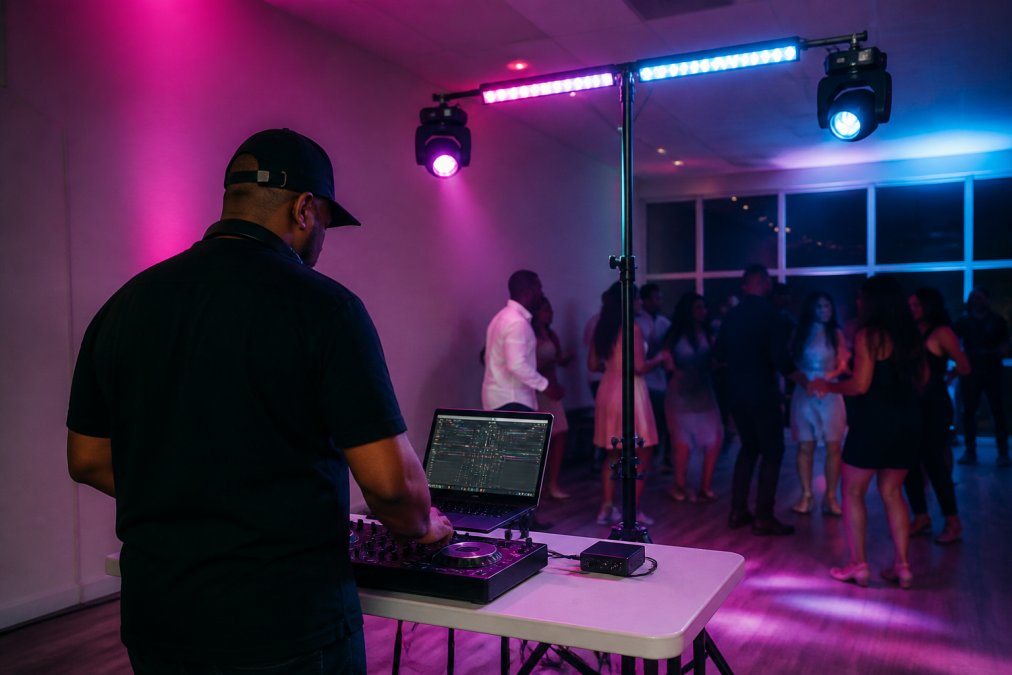
Mobile DJs need portability, fast setup, and reliable playback without a dedicated lighting tech. A laptop running professional control software with a USB-DMX interface or Art-Net node covers most DJ rig configurations. The AI Light Show feature in DMXSmartLink generates audio-reactive lighting effects automatically from a line-in source, so the rig responds to music without manual programming.
Scene recall is particularly valuable for mobile DJs. Programming a show file once and recalling it at every venue saves significant time across a full season of events.
Churches and Houses of Worship
Churches present a specific challenge: the operator is often a volunteer with limited training, the show must run reliably every week without rehearsal, and the rig typically mixes professional DMX stage fixtures with consumer smart lights.
A scene-based workflow is the answer. A technical director programs the looks once, stage wash, sermon lighting, worship mode, house lights, saves them as named scenes, and the volunteer recalls them with a single button press. The DMXSmartLink HUB was designed around this workflow: one dashboard, both DMX fixtures and smart lights, scenes that return the rig to exactly the saved state.

Small Theaters and Permanent Venue Installs
Small theaters need cue list control, reliable show file management, and a fixture library covering their specific inventory. Permanent installs benefit from hardware-timed DMX output. The Pro Output Kit with the ENTTEC DMX USB Pro provides buffered, clocked output that demanding theatrical fixtures require.
If a touring production specifies a particular console or protocol, the software layer needs to speak Art-Net or sACN fluently. DMXSmartLink's compatibility with grandMA, Lightkey, and any Art-Net-capable console means it functions as a link rather than a replacement.
Portability, Ease of Use, and Technical Support
Portability in a software-based lighting system means the control environment travels without hardware dependencies. DMXSmartLink's license runs on Mac, Windows 11, Raspberry Pi 5, and Linux, so the operator can run the same show file on a laptop at a mobile event and on a dedicated hub at a permanent install.
Ease of use is where the free-vs-paid distinction is most visible. Professional-grade software invests in the user interface because the operator is often under pressure. A web-based visual control dashboard accessible from any browser on the network, including a phone during soundcheck, removes the requirement to be physically at the control position.
Technical support is hardest to evaluate before you need it. For a DJ with an event in two hours or a church tech on a Sunday morning, the difference between a forum thread and direct support is significant. According to AVIXA's professional AV industry resources, the live event production sector identifies technical support response time as a top factor in software purchasing decisions.
Verdict: When the Investment Pays Off
Professional lighting software is worth the cost when the alternative is managing two separate control systems mid-show, rebuilding your rig from scratch at every venue, or accepting that smart lights will never sync reliably with professional fixtures.
For most DJs, churches, and small theaters: the software cost is not the real investment. The real investment is learning a system that fits your workflow. Free tools work for hobbyists and low-stakes environments. For anyone running paid events, weekly services, or permanent venue installs, professional-grade control software pays back its cost within a few shows.
The DMXSmartLink product line covers the full range of deployment scenarios:
| Product | Price | Best For | DMX Output |
|---|---|---|---|
| Software Annual License | $99.99 | Existing hardware, advanced users | Via your own interface |
| HUB - Network Edition | $299 | Network-only rigs, Art-Net/sACN | No XLR (add-on available) |
| HUB - Output Kit (Basic) | $349 | First-time DMX users | Standard USB-DMX |
| HUB - Pro Output Kit | $449 | Venues, permanent installs | ENTTEC DMX USB Pro |
| HUB - Pro Dual I/O Kit | $649 | Pros needing simultaneous I/O | ENTTEC in + out |
The free 14-day trial removes evaluation risk entirely. Patch a fixture, save a scene, run it against your actual show, and decide based on your own rig.

Frequently Asked Questions
Q: What is the best DMX software for small venues and mobile DJs?
A: The best choice depends on your rig. Free options like QLC+ handle basic cue lists and patching, but lack smart light integration and reliable technical support. For small venues and mobile DJs who need to run Govee smart lights alongside standard DMX fixtures from one unified dashboard, DMXSmartLink ($99.99/year for the software license) fills that gap without requiring expensive hardware consoles. It runs on a Mac, Windows PC, Raspberry Pi, or Linux machine you already own.
Q: Is there any free DMX controller software worth using?
A: Yes, with caveats. Free tools like QLC+ offer genuine DMX universe control, fixture library support, and cue list programming at no cost. They work well for straightforward rigs where all fixtures speak standard DMX. The limitations show up when you need smart light integration, a polished user interface for volunteers or non-technical operators, reliable technical support, or a fixture library that covers consumer smart home devices. For those needs, paid professional lighting software closes the gap quickly.
Q: What are the main benefits of paid lighting software over free alternatives?
A: Paid professional lighting software typically delivers a more stable show file format, better latency performance, active technical support, and broader fixture library coverage. For users integrating smart lights into DMX rigs, the critical advantage is protocol connecting: tools like DMXSmartLink patch Govee and similar devices as real DMX fixtures, so your lighting console treats them identically to any other channel. Free tools rarely support this workflow, forcing manual app switching during live performance.
Q: How does DMXSmartLink close the gap between smart lights and professional consoles?
A: DMXSmartLink runs on your existing hardware and speaks Art-Net and sACN, the same protocols used by consoles like grandMA, QLC+, and Lightkey. It exposes your Govee smart lights as standard DMX fixtures on the network, so your console patches and controls them exactly like any moving head or wash fixture. You assign DMX addresses, build cue lists, and trigger scenes from the same interface you already use. No separate app, no mid-show switching, no additional proprietary hardware required.
Q: Do I need professional lighting software for a small stage setup?
A: Not always. A simple two-universe rig with standard DMX fixtures and a basic cue list can run adequately on free control software. Professional lighting software becomes worth the cost when your setup includes smart lights alongside DMX fixtures, when multiple operators need a clean and consistent user interface, when show file reliability matters for repeated productions, or when you need MIDI integration, OSC control, or pre-visualization capabilities. At $99.99/year, the entry point for professional-grade software is low enough that most small stages can justify it.
The hardest part of integrating smart lights into a professional rig isn't the hardware, it's finding control software that treats both fixture types as first-class citizens in the same show file. DMXSmartLink solves exactly that problem: a unified dashboard for DMX fixtures and smart lights, compatible with Lightkey, QLC+, and grandMA, running on hardware you already own. Start the free 14-day trial at DMXSmartLink and see what your full rig looks like under unified control.
This article was written using GrandRanker
