
Table of Contents
- What Makes DMX Software Reliable for Live Events
-
DMX Lighting Control Software Comparison
- 1. DMXSmartLink, Best for Smart Light Integration
- 2. grandMA3 onPC, Best for Professional Touring
- 3. ChamSys MagicQ PC, Best Free Option for Complex Shows
- 4. Chauvet DJ ShowXpress, Best Free Entry Point for DJs
- 5. ADJ myDMX GO, Best for Tablet-Controlled Portable Rigs
- 6. rekordbox Lighting Mode, Best for Pioneer DJ Ecosystem Users
- How to Integrate Smart Lights into DMX
- Key Features Every Reliable DMX Software Should Have
- Platform Support, Hardware Compatibility, and Scalability
- Troubleshooting and Common Issues
- Which DMX Software Should You Choose?
- Frequently Asked Questions
Last Updated: September 1, 2026
Choosing reliable dmx software for live events is harder than it looks. The market splits between consumer-grade apps that buckle under pressure and professional consoles that assume you have a dedicated lighting crew. At DMXSmartLink, we work with DJs, churches, streamers, and small theaters every day, and the single most common failure point we see is not a bad fixture or a blown fuse, it's software that wasn't built for live conditions.
This guide compares six software options across the criteria that actually matter for live performance: latency, stability, hardware compatibility, audio-reactive features, and learning curve.
Quick Picks:
- Best for Smart Light Integration: DMXSmartLink, patches Govee and smart fixtures as real DMX channels, works with any console
- Best for Professional Touring: grandMA3 onPC, full-featured, scalable, industry standard
- Best Free Option: ChamSys MagicQ PC, 64 universes free via Art-Net and sACN
- Best for DJ Auto-Sync: rekordbox Lighting Mode, music-phrase analysis built in
- Best Budget Entry Point: Chauvet DJ ShowXpress, free software, broad fixture support
- Best Portable Rig: ADJ myDMX GO, tablet-controlled, no programming required
What Makes DMX Software Reliable for Live Events
Reliable dmx software does exactly what you programmed it to do, every time, without signal errors, crashes, or timing drift during a live show.
Latency, Stability, and Signal Integrity
Latency in DMX systems refers to the delay between a command input and the fixture response. The DMX512 protocol, as defined by ANSI E1.11 DMX512-A standard, refreshes at up to 44 frames per second, giving a theoretical minimum refresh cycle of about 23 milliseconds. Software that adds processing overhead on underpowered hardware introduces noticeable lag on fast chases and audio-reactive effects.
Signal integrity matters equally. Software that handles Art-Net and sACN natively avoids the USB-to-DMX conversion bottleneck for larger rigs. For smaller setups, a quality USB-DMX interface keeps latency consistent.
Learning Curve: Beginners vs. Experienced Lighting Designers
Most platforms are accessible for basic scene triggering within an hour, but patching a large fixture library, building a cue list with timecode, or setting up MIDI mapping takes days of focused practice. Software targeting beginners prioritizes auto-programming and preset effects. Professional software prioritizes granular control and show file portability.
DMX Lighting Control Software Comparison
The six options below cover the realistic range from entry-level to touring-grade.
| Software | Free Tier | Best For | Platform | Universes (Free) |
|---|---|---|---|---|
| DMXSmartLink | 14-day trial | Smart light + DMX integration | Mac, PC, Pi, Linux | Depends on interface |
| grandMA3 onPC | Free software | Professional touring | Windows | 2 (software only) |
| ChamSys MagicQ PC | Yes | Theater and concert design | Win, Mac, Linux | 64 via Art-Net/sACN |
| Chauvet DJ ShowXpress | Yes | DJs and small venues | Win, Mac | Up to 6 |
| ADJ myDMX GO | No | Portable, tablet-controlled rigs | iOS, Android, Fire | 1 (upgradeable) |
| rekordbox Lighting Mode | No | DJ music-sync automation | Win, Mac | 1 (via RB-DMX1) |
1. DMXSmartLink, Best for Smart Light Integration
DMXSmartLink fills the gap between professional consoles and consumer smart lights. The software patches Govee smart lights and smart home fixtures as real DMX channels inside any console that outputs Art-Net or sACN. Everything runs from a single interface with a unified cue list.
Cross-platform support is genuine: macOS, Windows 11, Raspberry Pi 5, and Linux all run the same software. The 14-day free trial requires no credit card.
What works: True DMX patching for smart fixtures. Any console that speaks Art-Net or sACN sees these lights as standard DMX fixtures.
What to know: You need a DMX interface, USB or Art-Net/sACN node, for DMX output.
2. grandMA3 onPC, Best for Professional Touring
grandMA3 onPC is the software that runs on full grandMA3 consoles, available free on PC. The feature set is comprehensive: full cue list management, timecode integration, MIDI mapping, sACN and Art-Net output, and support for up to four monitors. DMX output requires a grandMA3 onPC hardware key or command wing, starting around $479.
What works: Unmatched scalability. A show file built on grandMA3 onPC runs identically on a full grandMA3 console, no translation, no compatibility issues.
What to know: This is overkill for a mobile DJ or a church with a dozen fixtures.
3. ChamSys MagicQ PC, Best Free Option for Complex Shows
MagicQ PC offers 64 universes of output via Art-Net, sACN, and Pathport at no cost. For a theater or installation designer working with a large fixture count, that's serious capability for zero software spend. The feature set includes full pixel mapping, HD media playback on up to eight layers, and show file compatibility across all MagicQ hardware. Cross-platform support covers Windows, Mac, and Linux.
What works: The universe count and media playback capabilities at the free tier are genuinely unusual.
What to know: The interface is dense. New users will spend time in the documentation before they're confident.
4. Chauvet DJ ShowXpress, Best Free Entry Point for DJs
ShowXpress is free software bundled with Chauvet DJ's DMX interfaces. It transforms any Windows or Mac computer into a functional lighting console with scene triggering via mouse, keyboard, MIDI, sound, or BPM tap. The built-in effect generator handles pixel mapping and complex chases without manual channel programming. Wireless scene triggering via the Live_Mobile app adds flexibility for solo operators.
What works: The price point and ease of setup. For a mobile entertainer running a Chauvet rig, this is the fastest path from unboxing to show-ready.
What to know: ShowXpress requires a Chauvet DMX 512 interface to function; it will not output DMX through third-party hardware.
5. ADJ myDMX GO, Best for Tablet-Controlled Portable Rigs
ADJ myDMX GO pairs a compact Wi-Fi DMX link with an iPad, Android, or Amazon Fire tablet app. No programming required; two FX wheels handle color chases and movement patterns with eight pre-programmed effects each. The fixture library contains over 15,000 profiles. Hardware cost is $259.99 for the link.
What works: Setup speed and portability. For a DJ who needs a working light show in ten minutes at a new venue, myDMX GO is the fastest option.
What to know: The tablet dependency is a real operational consideration. A dead battery or Wi-Fi dropout mid-show is a different kind of failure than a software crash.
6. rekordbox Lighting Mode, Best for Pioneer DJ Ecosystem Users
rekordbox Lighting Mode uses phrase analysis to automatically generate lighting sequences synchronized to music. For DJs already running rekordbox, the integration is seamless. The Macro Editor allows fine-tuning of lighting patterns against waveform and beatgrid data.
What works: The automation quality is genuinely good. For a DJ who wants music-reactive lighting without building a single chase manually, this is the most turnkey option.
What to know: Requires both a rekordbox DJ subscription and the dedicated RB-DMX1 interface.
How to Integrate Smart Lights into DMX
Integrating smart lights into a DMX rig is the workflow that most dmx software guides skip.
Patching Smart Fixtures into Your Console
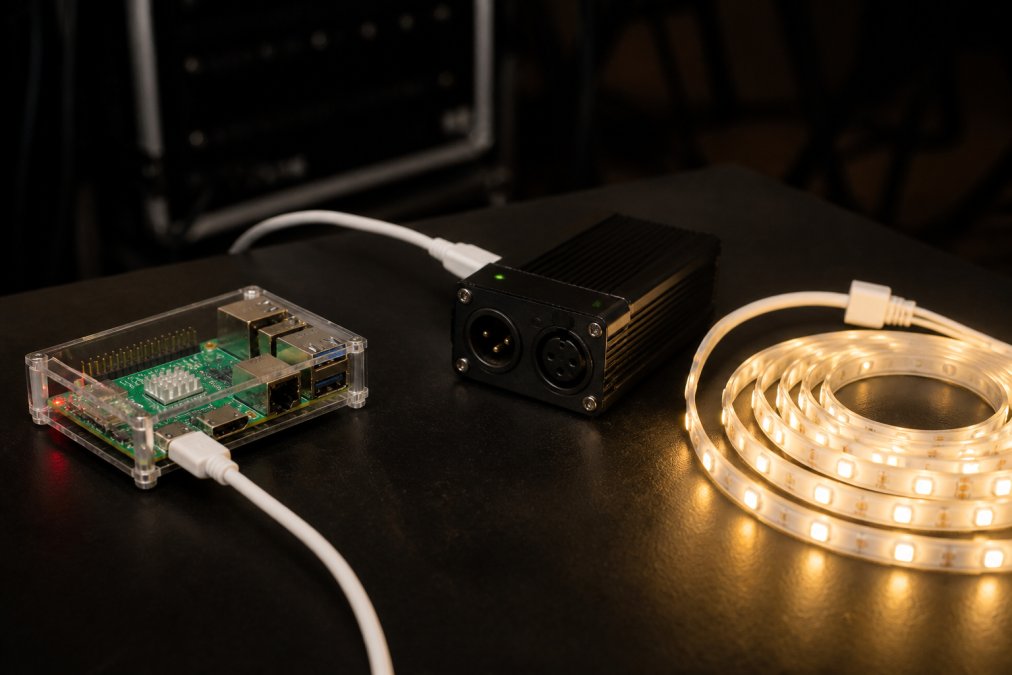
Smart fixture patching assigns a smart light a DMX address so your console sees it as a standard DMX fixture. Without a link layer, smart lights communicate over Wi-Fi or Bluetooth using proprietary protocols, invisible to any DMX console.
DMXSmartLink handles this translation. The software assigns each smart fixture a DMX address and universe, then converts incoming DMX data into the appropriate API commands for Govee and smart home fixtures. From the console's perspective, the fixture is a standard DMX device.
The practical steps:
- Install DMXSmartLink on your control machine (Mac, PC, Pi, or Linux)
- Connect your DMX interface, USB-DMX or Art-Net/sACN node
- Add your smart fixtures in the DMXSmartLink dashboard and assign DMX addresses
- Configure your console to output to the same Art-Net or sACN universe
- Patch the new addresses in your console's fixture library
- Test each fixture with a color picker and fader before going live
Art-Net and sACN: Choosing Your Protocol
Art-Net is an Ethernet-based DMX protocol that carries multiple DMX universes over a standard network. It is widely supported and works well for most live event setups.
sACN (Streaming ACN), defined by ANSI E1.31 sACN standard, is the ANSI-standardized alternative. It handles higher universe counts more efficiently and is preferred for large installations.
Key Features Every Reliable DMX Software Should Have
Audio-Reactive and Music Synchronization
Audio-reactive dmx software analyzes an incoming audio signal and maps fixture parameters to the beat, frequency bands, or phrase structure of the music. Basic BPM tap tempo is the minimum. Better implementations use real-time signal processing to detect beats automatically. Some solutions, like DMXSmartLink, analyze musical phrase structure to trigger scene changes at musically logical moments.
For live streamers and content creators, audio-reactive lighting that syncs to broadcast audio is a production quality differentiator. For DJs, it reduces manual workload during a set.
MIDI Mapping, Timecode, and Hybrid Show Control
MIDI mapping assigns console functions to MIDI controller inputs. A well-configured MIDI map lets a single operator run a complex show from a compact controller.
Timecode synchronizes playback to an external clock signal, typically SMPTE or MTC, as documented by MIDI Manufacturers Association timecode specifications. This locks lighting cues to audio playback or video with frame-accurate precision.
Hybrid show control combines timecode automation with live manual control, allowing the operator to override any automated cue in real time. grandMA3 onPC handles all three natively. ChamSys MagicQ PC supports timecode and MIDI. DMXSmartLink integrates into consoles that provide these features, extending that capability to smart fixtures.
Platform Support, Hardware Compatibility, and Scalability
Platform support determines where your show file lives and what hardware it talks to:
- Windows: Supported by every option on this list.
- macOS: Supported by DMXSmartLink, grandMA3 onPC, ChamSys MagicQ, ShowXpress, and rekordbox.
- Linux / Raspberry Pi: DMXSmartLink is the only option with confirmed Raspberry Pi 5 and Linux support.
Hardware compatibility is where real differences appear. ShowXpress requires Chauvet hardware. rekordbox Lighting Mode requires the RB-DMX1. grandMA3 onPC requires MA Lighting hardware for DMX output. ChamSys MagicQ and DMXSmartLink work with third-party USB-DMX interfaces and any Art-Net or sACN node.
Scalability follows universe count. ChamSys MagicQ scales highest at the free tier. grandMA3 onPC scales highest overall with hardware investment. DMXSmartLink scales to whatever your console and network infrastructure support.
Troubleshooting and Common Issues
Most dmx software problems are not bugs; they're configuration errors in the signal chain. Check these in order:
- IP address conflicts: Art-Net and sACN nodes must be on the same subnet as your control machine. A mismatched IP range is the most common cause of "no output" symptoms.
- Universe numbering: Art-Net universes are zero-indexed in some software and one-indexed in others.
- Refresh rate mismatch: If a fixture is flickering or not responding, check whether the DMX refresh rate in your software matches the fixture's requirements.
- USB-DMX driver conflicts: On Windows, USB-DMX interfaces sometimes conflict with other USB audio devices. Install manufacturer drivers explicitly.
Community support quality varies. grandMA3 has extensive documentation and a large professional user base. ChamSys maintains active forums. DMXSmartLink is veteran-owned and operated, which means direct support access.
Which DMX Software Should You Choose?
The right choice depends on what your rig actually looks like, not what you aspire to run someday.
| Use Case | Recommended Software | Why |
|---|---|---|
| Smart lights + DMX console, any size | DMXSmartLink | Only option that patches smart fixtures as real DMX |
| Professional touring or theater | grandMA3 onPC | Full console feature set, industry-standard show files |
| Large-scale free installation | ChamSys MagicQ PC | 64 universes free, pixel mapping, media playback |
| Mobile DJ, Chauvet hardware | Chauvet DJ ShowXpress | Free, audio-reactive, easy scene triggering |
| Portable rig, minimal programming | ADJ myDMX GO | Tablet control, no programming required |
| Pioneer DJ ecosystem | rekordbox Lighting Mode | Phrase-analysis music sync, deep Pioneer integration |
If your rig mixes DMX fixtures with Govee or other smart lights, which describes a growing number of churches, small theaters, and mobile DJs in 2026, none of the other options on this list solve that problem natively. DMXSmartLink is purpose-built for that workflow.
If you're running a pure DMX rig at professional scale, grandMA3 onPC is the industry standard for good reason. If budget is the primary constraint and your fixture count is high, ChamSys MagicQ PC's free tier is genuinely hard to beat.
The common mistake is buying for the rig you imagine having rather than the one you actually have. Start with what solves today's problem. The show file you build today should be portable enough to migrate when your rig grows.
Choosing the wrong dmx software for live events causes failures in front of an audience. DMXSmartLink eliminates the most common failure point for modern rigs: the gap between smart home fixtures and professional DMX control. With cross-platform support across Mac, PC, Raspberry Pi, and Linux, compatibility with any Art-Net or sACN console, and a free 14-day trial that requires no credit card, the barrier to testing it in your actual rig is zero. Start the Free 14-Day Trial at DMXSmartLink and run your first full show file before committing.
Frequently Asked Questions
Q: Is there free DMX controller software that actually works for live events?
A: Several options offer free tiers worth using in production. grandMA3 onPC and ChamSys MagicQ PC are both free to download and support Art-Net and sACN output at no cost, though DMX output via USB requires their respective hardware interfaces. DMXSmartLink offers a free 14-day trial with no credit card required, letting you test smart light integration with your existing console before committing. Free does not always mean limited, evaluate based on your fixture count and protocol needs.
Q: Do I need a hardware interface to use DMX software for live events?
A: For most DMX software, yes. A USB-DMX interface (such as an ENTTEC DMX USB Pro) or an Art-Net/sACN node is required to send DMX signals to physical fixtures. Software-only solutions that output over Art-Net or sACN can skip the USB interface if your fixtures or nodes accept network-based DMX directly. DMXSmartLink supports both USB-DMX devices and Art-Net/sACN, giving you flexibility depending on your rig.
Q: How do I integrate smart home lighting into a professional DMX rig?
A: The core challenge is that smart lights speak Wi-Fi protocols, not DMX. A link application like DMXSmartLink solves this by patching Govee and other smart fixtures into your lighting console as standard DMX fixtures. Once patched, your console treats them like any other fixture, you can assign faders, build cue lists, and trigger scenes without switching between apps. The software translates DMX channel values into the smart light's native protocol in real time.
Q: What is the best DMX software for beginners versus professionals?
A: Beginners benefit most from software with a visual fixture library, drag-and-drop patching, and built-in effect generators, Chauvet DJ ShowXpress and ADJ myDMX GO fit that profile. Professionals managing multi-universe rigs, timecode, and complex cue lists typically move to grandMA3 onPC or ChamSys MagicQ PC. DJs and church techs connecting smart lights into an existing console will find DMXSmartLink fills a specific gap none of the general-purpose options address natively.
Q: Can DMX software handle audio-reactive lighting for live DJ performances?
A: Yes. Several options include audio-reactive or music-synchronized features. rekordbox Lighting mode uses phrase analysis to auto-generate lighting sequences from your DJ set. DMXSmartLink includes an AI Light Show mode that creates music-synced effects across both DMX fixtures and smart lights simultaneously. For manual BPM-triggered scenes, ShowXpress supports sound and manual BPM triggering. The right choice depends on whether you want full automation or hands-on fader control during the performance.
This article was written using GrandRanker
