
Table of Contents
- How Lighting Control Works in a Small Theater
- Consoles, Software, and Hybrid Control Compared
- Affordable DMX Lighting for Small Venues on a Real Budget
- Integrating Smart Lights with DMX Fixtures
- Using MIDI Controllers for Stage Lighting
- Best Practices for Theater Lighting Cues
- Training Volunteers and Keeping the Rig Alive
- Frequently Asked Questions
Last Updated: September 15, 2026
How Lighting Control Works in a Small Theater
Professional lighting control for small theaters is the practice of running every stage, house, and effect fixture from one operator position using a consistent set of cues, fades, and recorded scenes. DMXSmartLink builds control tools for volunteer-run venues. The core idea is simple: a control signal tells each fixture what to do, and a cue list tells the operator when to do it. DMX512 remains the backbone protocol, carrying up to 512 channels per universe over a single cable run (esta.org). Most small theaters run one or two universes, which is plenty for a stage wash, a few specials, and some LED color.
Consoles, Software, and Hybrid Control Compared
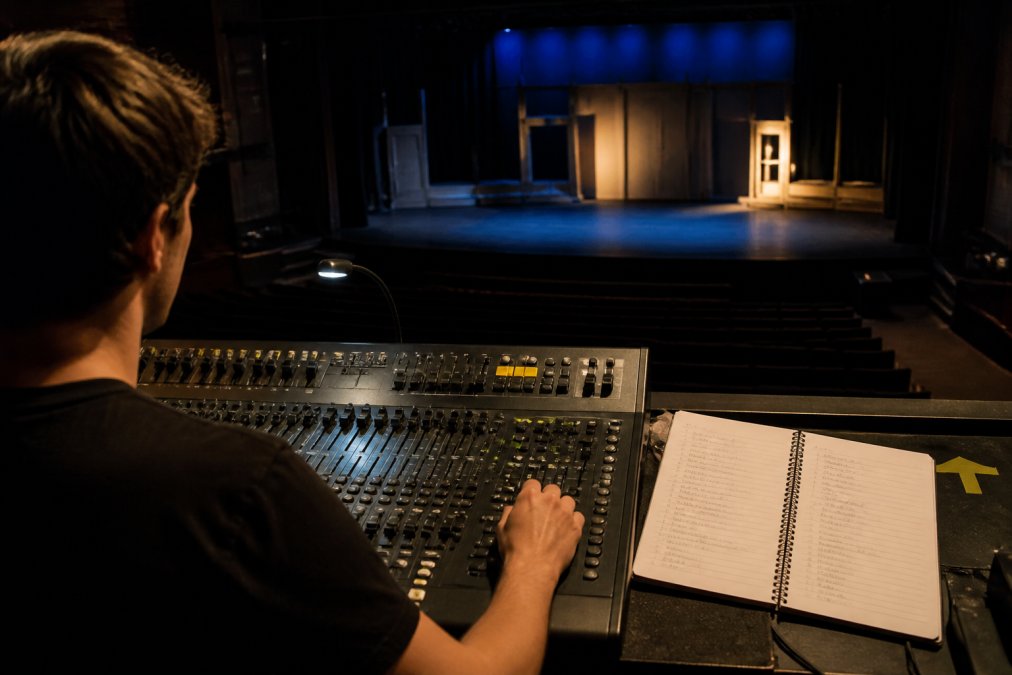
The right control platform depends on who runs your shows and how often your rig changes. A hardware console gives you physical faders and dedicated buttons that never depend on a laptop staying awake. Software control gives you a bigger screen, easier patching, and the ability to save and share show files. A hybrid setup uses both: a console or software for the main show, with a hardware interface handling DMX output and network protocols like Art-Net and sACN.
| Setup | Best For | Strengths | Trade-offs |
|---|---|---|---|
| Hardware console | Fixed rigs, hands-on operators | Tactile faders, no computer required | Limited fixture count, harder to reprogram |
| Software controller | Growing rigs, volunteers | Easy patching, saves show files | Depends on a stable computer |
| Hybrid workflow | Mixed DMX and smart lights | One dashboard, flexible playback | Needs a clear signal plan |
What a Hardware Console Does Well
Nothing beats a fader under your hand when a cue needs to move now. Hardware consoles excel at live playback: submasters, bump buttons, and a dedicated blackout are all within reach without looking at a screen. For a small theater running the same show for weeks, a console is predictable. The limitation is flexibility. Adding fixtures usually means repatching and rebuilding scenes, and older desks may cap your channel count.
Where Software Control Wins
Software wins on patching, fixture libraries, and scene programming. You can build a cue list on a laptop, save the show file, and recall it exactly next week. A software controller also handles automated lighting and moving lights more gracefully, because the fixture library tracks pan, tilt, color, and gobo parameters for you. The catch is reliability: the computer becomes part of the rig, so it needs to be dedicated and stable.
Affordable DMX Lighting for Small Venues on a Real Budget
Affordable DMX lighting for small venues comes down to spending on control and cabling first, then fixtures. A reliable control layer protects every fixture you buy later, and it is the one part of the rig you should not outgrow in a season. LED fixtures have made this easier: a single LED wash can replace a dimmer rack full of conventional lamps, and it draws far less power. When you plan a budget, separate it into three buckets: control, cabling and power, and fixtures.
- Control: software or a small console, plus a DMX output interface
- Cabling: XLR DMX runs, a terminator, and spare cables
- Fixtures: start with washes, add specials and color later
A Scalability Roadmap Instead of a One-Time Buy
Most small theaters outgrow their first control purchase within two or three seasons, usually because they added fixtures faster than they added channels or playback options. A better approach is to plan the rig in stages and pick control that survives each stage.
- Stage 1, One universe, one operator. A software controller on a dedicated laptop, a single DMX output, and a handful of LED washes. Everything runs from one cue list.
- Stage 2, Tactile playback. Add a USB MIDI controller so volunteers get pads and a fader without buying a full console. In DMX Smart Link, pads recall scenes, a fader on CC 7 rides the master level, and CC 20 and CC 21 step through scenes.
- Stage 3, Mixed protocols. Add smart lights for color and effects, and bring them into the same scene as the DMX fixtures. DMX Smart Link controls both protocols, so a Govee fixture and a stage wash can be recalled together.
- Stage 4, Networked output. Add the DMX Smart Link HUB when you need Art-Net or sACN output, more universes, or a fixed install that does not depend on one laptop staying awake.
Each stage reuses the work from the one before it. Scenes, cue lists, and fixture patches carry forward, so a volunteer who learned the rig in Stage 1 is not retrained from scratch in Stage 3.

Where the Money Actually Goes
A common pattern in volunteer-run venues is to overspend on fixtures and underspend on control and cabling, then fight reliability problems all season. Control and cabling are the parts that fail quietly: a marginal cable run, a missing terminator, or a laptop that sleeps mid-show. Fixtures are the part that fails loudly and gets replaced. Spend on the quiet parts first.
Two more practical notes. First, buy one spare of every cable length you use, because a dead DMX run on a Sunday morning is not a problem you can solve by ordering online. Second, keep the control computer dedicated to lighting. Sharing it with slide software or email is the fastest way to introduce a crash into a cue run.
ESTA's DMX512 and control protocol standards
Integrating Smart Lights with DMX Fixtures
Integrating smart lights with DMX fixtures is where most small venues gain the most for the least money. Consumer smart lights are inexpensive, bright, and easy to mount, but they normally live in a phone app, which is useless mid-show.
Patch smart lights into the same scene as your DMX fixtures rather than running them from a separate app. When both live in one cue, a single fader move keeps color and intensity matched across the whole stage.
Using MIDI Controllers for Stage Lighting
Best Practices for Theater Lighting Cues
Training Volunteers and Keeping the Rig Alive
A Training Checklist for New Operators
Maintenance and Longevity in a Multi-Use Space
Skipping fade times on recorded cues is the most common volunteer mistake. A cue that snaps instead of fading will pull attention away from the stage at exactly the wrong moment.
Frequently Asked Questions
How are theater lights controlled in professional settings?
A console or software controller sends DMX512 data over cable or network to dimmers and fixtures. The operator records cues, which are snapshots of every channel level, and plays them back in order. Small theaters often run 24 to 48 channels on one universe, with a mix of dimmers for conventional fixtures and direct DMX for LED fixtures and moving lights. Cue lists, fades, and a blackout button cover most of what a show needs.
Can consumer smart lights be integrated into a professional theater lighting rig?
Yes, when the controller controls both protocols. DMX Smart Link patches compatible Govee lights and anything exposed through Home Assistant or Homebridge as fixtures in your rig, so they sit alongside your DMX channels in one scene. You set the color and level once, save the scene, and recall it with the rest of the cue. That removes app fumbling mid-show and keeps the whole rig on one dashboard.
What is the difference between hardware consoles and software-based lighting control?
Hardware consoles have dedicated faders and buttons, boot fast, and need no computer. Software controllers run on a laptop, desktop, or Raspberry Pi, cost less, and make patching, fixture libraries, and scene editing easier on a screen. Many small venues use both: software for programming and a control surface or MIDI controller for live playback. The right pick depends on who runs the board and how often the rig changes.
What role does MIDI play in modern theater lighting control?
MIDI lets a cheap controller drive your lighting software. In DMX Smart Link, pads recall scenes, a fader on CC 7 rides the level, and CC 20 and CC 21 step through scenes. A volunteer who has never touched a lighting console can hit a pad and get the right scene. That makes MIDI a practical training shortcut for community theaters and church tech teams.
What are the benefits of using DMX512 for small theater productions?
DMX512 is the standard every fixture, dimmer rack, and controller understands, so gear from different makers works together. One universe carries 512 channels over a single cable run, which is more than enough for a small stage. It also supports RDM for remote fixture setup and works over Art-Net and sACN when you want network distribution instead of long cable runs.
How do you choose the right lighting control software for a community theater?
Start with the people who will run it. Look for a clear scene and cue list workflow, a fixture library that already includes your gear, and support for the platforms you own. Check whether it runs on Windows, macOS, Ubuntu, or Raspberry Pi, and whether it works offline once licensed. DMX Smart Link covers over 12,000 fixture profiles, speaks Art-Net and sACN, and runs a free 14-day trial with no credit card.
Running a small theater rig is a challenge of consistency: the same cues, the same fades, the same result every night, with volunteers at the controls. DMXSmartLink builds the control layer that makes that possible, with a unified dashboard for DMX fixtures and smart lights, scene recall from a phone, tablet, or browser, and support for Stream Deck, YoloDeck, and USB MIDI controllers. Get started with DMXSmartLink and bring your whole rig under one reliable controller.
