
Table of Contents
- Why the Official Govee Home App Falls Short for Pros
- Best Govee Light Software: Quick Comparison
- DMX Integration for Smart Lights: The Professional Standard
- DMXSmartLink Features That Close The Gap
- How to Sync Govee Lights with Music and Your Console
- Where Each Software Option Wins
- Conclusion: Choose the Right Control Software
- Frequently Asked Questions
Last Updated: September 7, 2026
The official Govee Home app handles basic color changes and effects well enough for a living room, but it falls apart when you need to trigger scenes from a lighting console during a live event, which is why understanding govee light software options matters for professionals. Finding the best software for controlling govee lights for professional use means moving beyond consumer apps entirely. DMXSmartLink builds tools specifically for DJs, churches, and production teams who need reliable, console-driven control of smart fixtures.
The gap between consumer smart home gear and professional lighting rigs is significant. The Govee ecosystem responds quickly through its own mobile application, yet it lacks the protocol support that DMX consoles speak natively. This guide breaks down the software landscape so you can decide whether the official app suffices or whether you need a link like DMXSmartLink to treat your Govee lights as standard DMX fixtures.
Why the Official Govee Home App Falls Short for Pros
The Govee Home app (available for iOS and Android) is the default control surface for every Govee product, from the RGBIC light strips to the Lyra floor lamps. For a homeowner, it is genuinely capable: you get scene presets, scheduling, music-reactive modes, and firmware updates delivered over WiFi or Bluetooth. The app's color wheel and effect gallery are polished, and the device grouping feature lets you command multiple lights in a room with a single tap.
However, when you move from a living room to a live event, the app's architecture becomes the bottleneck. The most significant limitation is that the app relies on Govee's cloud servers for many operations. Every command you send from your phone travels from your device to Govee's cloud and back to your light, adding 200-500 ms of latency on a typical home network (nist.gov). That delay is imperceptible when changing a color for a movie night, but it is a dealbreaker when you are syncing a strobe effect to a kick drum or firing a scene change on a cue from your lighting console.
Beyond latency, the app lacks any form of external trigger support. There is no OSC, MIDI, Art-Net, or sACN input (esta.org). You cannot patch a Govee light into a DMX universe, and you cannot send a command from QLC+ or Lightkey directly to the app. The only automation path is the app's own scheduling engine, which is not designed for real-time show control.
A second issue is the lack of a true status feedback loop for third-party systems. When you control a light through the app, the app knows the light's state. But if you try to control that same light through a third-party platform that uses Govee's local API, you often run into state desynchronization, the light changes, but the third-party dashboard still shows the old color or brightness. This forces operators to poll the device repeatedly, which adds complexity and slows down response times.
Finally, the app treats each light as an isolated device. There is no unified dashboard where you can see every fixture's status, DMX address, or group assignment in a single view. For a production rig with 20 Govee light bars spread across a stage, the app's card-based layout becomes unmanageable. You are constantly swiping between device pages, and there is no way to build a custom control surface that matches your show's cue list.
In short, the Govee Home app is a well-executed consumer product, but it is not a show-control tool. It lacks the protocol support, the low-latency local path, and the unified status view that professional lighting software assumes as a baseline.
Best Govee Light Software: Quick Comparison
Several software paths exist for controlling Govee lights, each suited to different skill levels and production demands. The table below summarizes the primary options you will encounter when researching the best software for controlling govee lights.
| Software Approach | Control Method | Best For | Latency Profile |
|---|---|---|---|
| Govee Home App | WiFi / Cloud | Basic scenes, home use | High (cloud dependent) |
| DMXSmartLink Link | Art-Net / sACN | Live events, console control | Low (local network) |
| DIY Open-Source Platforms | Local API / Custom | Tinkerers, permanent installs | Variable |
| Third-Party Plugins | Ecosystem Integration | Specific console workflows | Moderate |
The official app remains the easiest entry point for simple tasks like setting ambient lighting effects. Yet for live production, the DMXSmartLink approach stands apart because it translates your console's commands into actions your Govee lights understand, all over your local network without relying on cloud servers.
DMX Integration for Smart Lights: The Professional Standard
DMX integration for smart lights is the process of making consumer fixtures addressable through the same Art-Net or sACN protocol your console uses for traditional stage gear. Instead of treating a Govee light bar as a standalone WiFi gadget, the control software assigns it DMX channels, allowing your grandMA, Lightkey, or QLC+ setup to control it just like any other fixture.
This matters because it eliminates the need for a second operator running a tablet during your show. The technical director at a house of worship can patch a Govee light into the same cue list as the house LED pars, creating cohesive transitions without touching a separate app. The result is a single point of control for your entire rig.
The ESTA technical standards committee documentation on DMX512 and networked control protocols outlines why standardizing on DMX protocols ensures interoperability across manufacturers, a key reason professional environments avoid proprietary consumer apps.
DMXSmartLink Features That Close The Gap
DMXSmartLink is a veteran-engineered software solution that patches Govee and other smart lights into your lighting console as real DMX fixtures. It runs on Mac, PC, Pi, or Linux, and supports both Art-Net and sACN, meaning it integrates with virtually any console you already own, including Lightkey, QLC+, and grandMA.
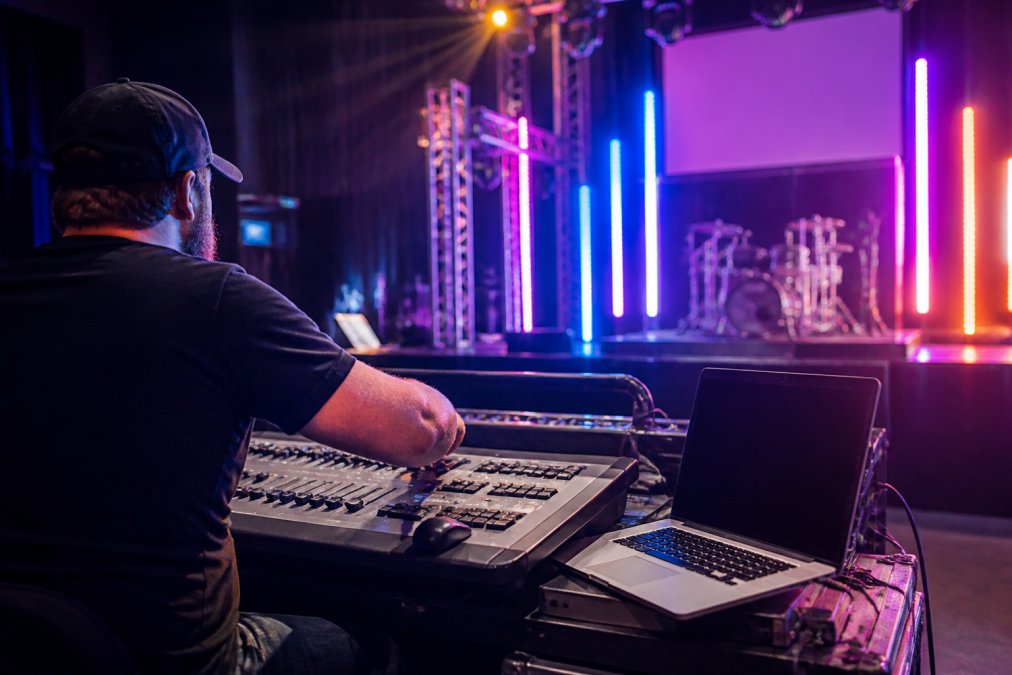
The software creates a unified dashboard that shows your DMX fixtures and smart lights in one interface. This visibility is crucial during a live stream or service, as it provides real-time status monitoring without fumbling through the Govee app. The primary benefit is reliability: your cues fire on time because the control path stays on your local network, avoiding cloud synchronization delays.
For operators concerned about mid-show failures, the software's design mirrors standard console workflows. Your lighting tech does not need to learn a new interface; they simply see Govee fixtures listed alongside their existing gear. Setup typically takes minutes, and the free 14-day trial lets you test compatibility with your specific equipment before committing.
How to Sync Govee Lights with Music and Your Console
Syncing Govee lights with music and your console requires routing audio and control data correctly. The most reliable method for professional use is to let your console handle the sound-to-light reaction, rather than relying on the Govee app's built-in microphone mode which reacts to ambient noise with noticeable lag.
To sync Govee lights with music effectively, you first configure your console to receive audio input, either from your DJ software or a dedicated line-in. Next, assign your Govee fixtures to a submaster that responds to the audio trigger. Finally, DMXSmartLink translates those console commands into the WiFi signals your Govee lights expect, keeping the entire chain synchronized.
A common mistake is attempting to use the Govee app's music mode in parallel with your DMX console. This creates conflicting commands and erratic behavior. The professional approach is to bypass the app entirely during performances, treating the Govee hardware strictly as output devices for your DMX controller.
Where Each Software Option Wins
Choosing the right control software is not a single decision, it is a trade-off between latency, flexibility, and setup effort. Here is a grounded look at the realistic options, including the DIY and open-source paths that most consumer guides skip.
The Official App: Best for Zero-Setup Home Use
The Govee Home app wins for everyday use where you want quick effects without touching a router or a config file. It is the only option that works out of the box with every Govee product, and it handles firmware updates that third-party tools cannot. If your goal is ambient lighting in a den or a bedroom, the app is the right call. Its music mode, which uses the phone's microphone, is fine for casual parties but lags noticeably on bass transients, expect 150-300 ms of delay between the beat and the light response.
Home Assistant: The DIY Powerhouse for Permanent Installations
For users who want local control, automation, and no cloud dependency, Home Assistant (an open-source home automation platform) is the strongest community-driven option. The official Govee integration in Home Assistant uses the local area network (LAN) API that Govee exposes on most WiFi-enabled products. This means your commands stay on your local network, cutting latency to under 50 ms in most cases. You can build automations like "when the front door opens, flash the Govee strip red" using Home Assistant's visual automation editor, and you can expose those lights to Alexa or Google Home through the same platform.
The catch is setup complexity. You need a device to run Home Assistant (a Raspberry Pi 4 or an old PC works), and you must configure the integration by entering your Govee account credentials or by discovering devices via mDNS on your network. Some older Govee models only support cloud-based control through the integration, which defeats the latency advantage. You also lose access to Govee's proprietary effects, the app's exclusive scene presets and animated gradients are not exposed through the local API. For a permanent install where you set a color once and leave it, Home Assistant is excellent. For live show control, it is not designed for that workflow.
Node-RED: The Flow-Based Middle Ground
Node-RED, a flow-based programming tool that runs on Node.js, offers a middle path for tinkerers who want more control than Home Assistant's automation editor but do not want to write code from scratch. Community-contributed nodes for Govee devices let you build custom flows that react to MQTT messages, HTTP webhooks, or even MIDI notes from a USB controller. This is the closest you can get to a DIY lighting console without buying commercial software.
The trade-off is that Node-RED requires you to understand the Govee LAN API's quirks. The API uses a proprietary encryption scheme on some models, and the community nodes handle this inconsistently. You will spend time debugging connection drops and state mismatches. Node-RED is a viable option for a tech-savvy user building a permanent installation, but it is not a reliable choice for a one-off live event where you cannot afford to troubleshoot mid-show.
The DMX Link Approach: Best for Live Production
When you need console-driven control with Art-Net or sACN, a dedicated link like DMXSmartLink is the only option that treats Govee lights as standard DMX fixtures. This approach wins for live events because it keeps the entire control path on your local network, bypasses the cloud entirely, and gives you a unified dashboard that shows your DMX rig and your smart lights in the same view. The reliability payoff is substantial for churches, DJs, and production teams that cannot afford a mid-show failure.
The Bottom Line on Software Choice
If you are a homeowner, the Govee Home app is sufficient. If you are a tinkerer with a permanent install, Home Assistant or Node-RED gives you local control and automation depth that the official app cannot match. If you are running a live show, a DMX link is the only path that gives you console-grade reliability and low latency. The mistake most users make is trying to stretch one tool across all three scenarios, the app fails live, and the DIY platforms fail when you need guaranteed timing.
Conclusion: Choose the Right Control Software
Selecting the right control software depends entirely on your production demands. If you are performing live, managing a service, or running a stream, the consumer app will eventually fail you at the worst moment. The best software for controlling govee lights in these scenarios is one that closes the gap between smart home technology and professional lighting control.
DMXSmartLink provides that link, offering reliable, veteran-engineered control that transforms your lighting setup into a cohesive production. With support for Art-Net and sACN, compatibility across major consoles, and a unified dashboard for your entire rig, it is designed to perform when the show is on the line.
Frequently Asked Questions
What is the best way to control Govee lights for professional shows?
For professional shows, the best way to control Govee lights is through DMX integration software like DMXSmartLink. This approach patches your smart lights as real DMX fixtures, allowing you to control them from your existing console (QLC+, Lightkey, grandMA) alongside your traditional rig. This eliminates app fumbling mid-show and provides unified, reliable control over every light in your setup.
Can I use DMX software to control Govee smart lights?
Yes. DMX integration for smart lights is possible using a link solution like DMXSmartLink. It translates DMX signals from your professional software into commands the Govee lights understand over your local network. This lets you use Art-Net or sACN to control them as standard DMX fixtures, giving you full control over color, effects, and scenes from your console.
How do I sync Govee lights with my professional lighting rig?
To sync Govee lights with your professional rig, you need software that acts as a link. DMXSmartLink connects to your console via Art-Net or sACN and controls the Govee lights over WiFi. Once patched, you can trigger scenes and effects in sync with your DMX gear. This provides a unified dashboard where smart lights and traditional fixtures respond together without noticeable latency.
What are the limitations of the official Govee Home app for advanced users?
The official Govee Home app is designed for consumer use, so it lacks the features professionals need. It offers no DMX or Art-Net support, making it impossible to integrate with a lighting console. It also has limited automation triggers, no cross-platform synchronization with professional tools, and its cloud-based control can introduce latency, which is risky for time-sensitive live performances.
The challenge is clear: consumer apps cannot keep pace with professional production demands. DMXSmartLink patches your Govee lights into your console as real DMX fixtures, eliminating mid-show app fumbling and providing a unified dashboard across Mac, PC, Pi, or Linux. Start the free 14-day trial and experience reliable control for your next event.
